
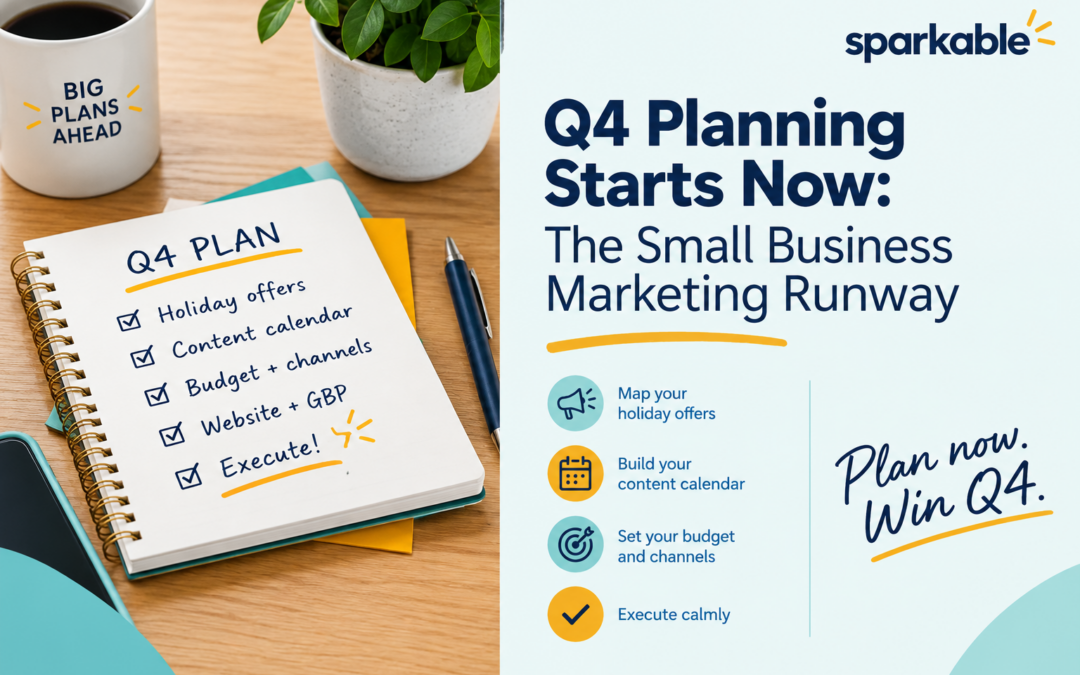
For many small businesses, Q4 feels like it arrives overnight. One minute you’re enjoying the last stretch of summer, and the next you’re thinking about holiday promotions, end-of-year sales, gift guides, events, email campaigns, social content, and next year’s goals.
The businesses that make the most of Q4 aren’t necessarily the ones with the biggest budgets or the most elaborate holiday campaigns. They’re often the ones that start planning before the season gets busy.
September is the perfect time to build your marketing runway, giving your business enough space to plan strategically, create content ahead of time, set your budget, and enter the holiday season ready to execute instead of scrambling.
Why September is the Time to Start
Q4 is a unique marketing window. Consumers are actively researching, shopping, planning, and making decisions — but they’re also being bombarded by marketing messages.
Starting in September gives you time to:
- Identify your most important Q4 goals
- Plan promotions and seasonal offers
- Build your content calendar
- Prepare email and social campaigns
- Determine where your advertising budget should go
- Refresh important website pages
- Strengthen your local SEO presence
- Coordinate promotions across channels
- Review what’s working, and what’s not, before spending more
Think of September as the runway. The longer and more organized your runway, the smoother your Q4 takeoff.
Step 1: Decide What You Want Q4 to Accomplish
Before you start creating holiday graphics or scheduling social posts, step back and define the goal. What does a successful Q4 actually look like for your business?
That might mean:
- Increasing holiday sales
- Filling appointments
- Generating more leads
- Promoting a specific product or service
- Increasing online bookings
- Driving more foot traffic
- Growing your email list
- Re-engaging past customers
- Moving excess inventory
- Ending the year with stronger brand awareness
You don’t need ten goals. Choose one or two primary objectives and let those goals guide your marketing decisions. A clear goal makes it much easier to decide what deserves your time and budget.
Step 2: Map Out Your Offers Early
If you’re planning a holiday promotion, don’t wait until the week before Thanksgiving to decide what you’re offering.
Start mapping your Q4 offers now.
Consider:
- October: Fall promotions, early holiday shopping, seasonal services, pre-holiday appointments or limited-time offers.
- November: Black Friday, Small Business Saturday, Cyber Monday, Thanksgiving messaging, gift-focused promotions or early holiday sales.
- December: Last-minute shopping, gift cards, holiday services, shipping deadlines, appointment availability, end-of-year promotions and thank-you messaging.
- Year-end: End-of-year sales, customer appreciation, charitable initiatives, business milestones and a look ahead to the new year.
Not every business needs a traditional holiday sale. In fact, some shouldn’t have one.
Step 3: Build a Content Calendar
Q4 content can pile up quickly. Holiday posts. Promotions. Emails. Reels. Blogs. Website updates. Event announcements. Last-minute reminders.
Instead of creating everything week by week, build a simple Q4 content calendar now. Start with your major dates and work backward.
One blog post can become several social posts. A customer story can become an email, Reel and website feature. A holiday promotion can have multiple pieces of content rather than one announcement that disappears after a day. Planning once and repurposing strategically can save a lot of time later.
Step 4: Don’t Forget the Website
Your social media might get the attention, but your website often gets the final say.
Before Q4 traffic starts picking up, take a look at the pages where you expect customers to land.
Ask:
- Is the offer immediately clear?
- Is the page easy to navigate?
- Are calls-to-action obvious?
- Is the phone number easy to find?
- Can customers book, buy or contact you without unnecessary steps?
- Does the page work well on mobile?
- Are seasonal promotions easy to find?
- Are your hours and holiday details accurate?
This is especially important for local businesses. Getting found is only half the job. Making it easy to take action is the other half.
Step 5: Choose Your Channels and Set the Budget
Q4 is not the time to automatically throw money at every marketing channel. Look at what’s already working.
Review your website traffic, email performance, social engagement, search visibility, advertising results and lead sources from the past few months.
Then ask:
Where are our best customers actually coming from? Your answer should influence where you invest.
Step 6: Get Your Local Presence Ready
If your business depends on customers in your area, don’t overlook local search heading into Q4. Make sure your Google Business Profile is accurate and active. Check things like business and holiday hours, website link, phone number, products and services, etc.
And don’t wait until December to start asking for reviews. A steady stream of authentic customer feedback can help build trust with people discovering your business throughout the holiday season. Your local search presence should be working alongside your other marketing, not sitting on the sidelines.
Step 7: Create Before You Need It
One of the biggest advantages of starting Q4 planning early is simply having things ready. Create as much as you reasonably can ahead of time like social graphics, email templates, blog content, promotional copy, FAQs and more.
You don’t need to schedule every post three months in advance. The goal is to remove as much avoidable work from the busiest weeks of the year as possible.
That leaves room for the things you can’t plan: trending topics, customer questions, unexpected opportunities and campaigns that need to change based on performance.
The holiday season will always be busy, but your marketing doesn’t have to be chaotic. Starting in September gives you something incredibly valuable: time to think strategically.
At Sparkable, we help small businesses turn big-picture questions into practical marketing plans, from strategy and content to SEO, paid advertising, websites and email.
If you’re not sure where your marketing stands heading into Q4, start with a free Sparkable diagnostic. It’s a simple way to identify opportunities, uncover gaps and determine where your marketing efforts can have the biggest impact before the year wraps up.
Recent Comments