
October brings plenty of spooky sights: haunted houses, creepy costumes and ghostly frights. For many small-business owners, there’s something even scarier lurking in the background:
Many small-business owners avoid marketing analytics because the numbers feel confusing, intimidating or potentially disappointing. And when you’re already juggling customers, employees and everything else that comes with running a business, digging into another dashboard might not sound like a treat.
But here’s the good news: Your marketing numbers aren’t something to fear. They’re clues that can help you make smarter decisions using marketing analytics.
You don’t need to become a data analyst overnight or track every metric under the sun. You just need to know which numbers matter, what they can tell you, and where to start.
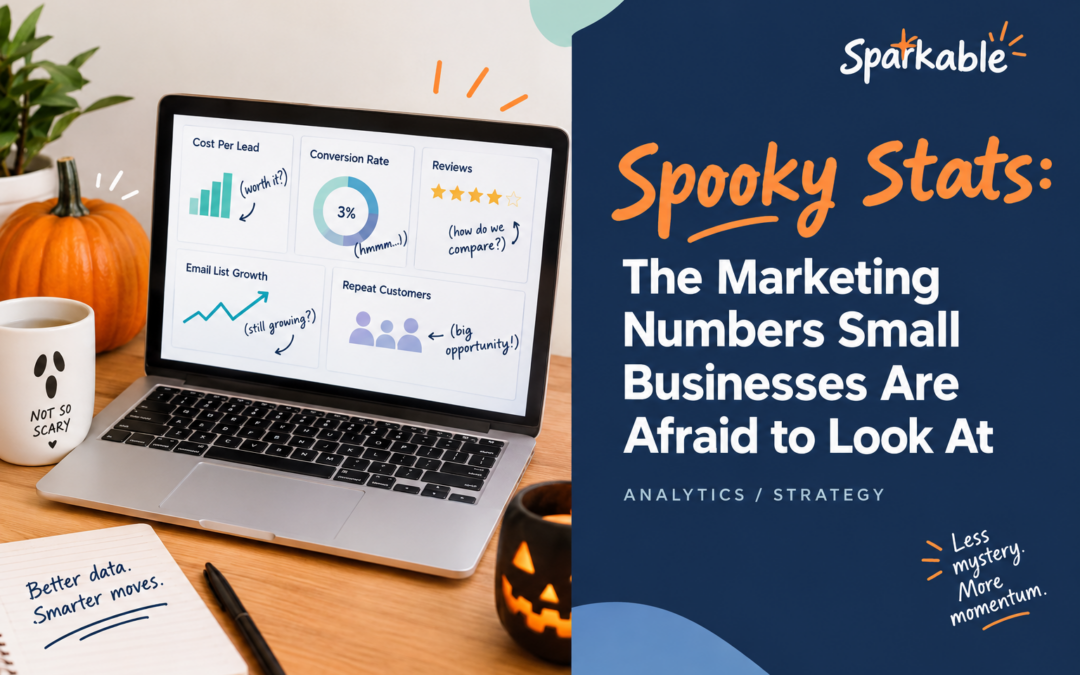
Let’s shine a flashlight on five small-business marketing metrics that deserve a closer look this Halloween.
1. Cost per lead: Is your marketing budget disappearing into thin air?
The spooky scenario: You’re investing in Google Ads, social media campaigns or other marketing efforts. Leads are coming in occasionally, but you’re not entirely sure whether the money you’re spending is paying off. Sound familiar?
Cost per lead (CPL) tells you how much it costs to generate one potential customer through your marketing efforts. To calculate it, divide the amount spent on a marketing campaign by the number of leads generated.
That number gives you a starting point for understanding whether your marketing investment is efficient. You can also compare campaigns to see which channels generate leads at a lower cost. Remember, the cheapest lead isn’t always the best lead. Quality matters, too.
2. Website conversion rate: The silent profit leak
The spooky scenario: Your website gets visitors, your social posts get clicks, and your business is showing up in search results. But your phone isn’t ringing as often as you’d expect.
Where are those potential customers going?
Your website conversion rate measures the percentage of visitors who complete a desired action. That might mean submitting a contact form, requesting a quote, making a purchase or booking an appointment.
A website can attract plenty of traffic and still struggle to generate leads. Sometimes, the problem isn’t getting more people through the door. It’s making it easier for the people already there to take the next step. Small changes can make a meaningful difference.
3. Review count vs. competitors: The trust gap
The spooky scenario: You know your business delivers great service. Your customers are happy, and you have a handful of glowing reviews. But when someone searches for your business alongside three competitors, another company appears to have a much stronger online reputation.
That gap can influence a potential customer’s decision before they ever visit your website. Online reviews help people decide which businesses deserve their trust. Your review count, average rating, and the recency of your reviews all contribute to the impression customers form when comparing local options.
Your total review count isn’t the only factor that matters. A business with fewer recent, detailed reviews might still make a stronger impression than one with hundreds of outdated reviews. Ratings, responses and the substance of customer feedback matter, too.
If you’re behind, don’t panic. Start by making it easier for satisfied customers to leave honest reviews. A simple follow-up email or a friendly request after a successful project can help build momentum over time using reputation management tactics. No tricks. No pressure. Just a consistent way to make your customers’ experiences visible.
4. Email list growth: The garden nobody’s watering
The spooky scenario: You have an email list, but you can’t remember the last time you checked how it’s growing. Maybe you send a newsletter occasionally, or perhaps those subscriber names have been collecting digital dust for months.
Your email list is an asset worth nurturing. Email list growth measures how your subscriber base changes over time. It can help you understand whether your website, lead magnets, signup forms and other email marketing efforts are attracting people who want to hear from your business.
Unlike social media followers, email subscribers give you a direct way to communicate with people who have chosen to hear from you, subject to applicable email marketing rules. That makes your list useful for sharing helpful content, promoting offers, announcing new services and encouraging repeat business.
A shrinking list isn’t automatically a disaster, either. Unsubscribes are a normal part of email marketing, and a smaller, engaged audience can be more valuable than a larger, inactive one. You don’t need a complicated campaign to get started. A clear invitation and a useful reason to subscribe are a good beginning.
5. Repeat customer rate: The growth opportunity hiding in plain sight
The spooky scenario: You’re always chasing the next new customer, investing time and money into attracting fresh leads. Meanwhile, the people who have already purchased from you might be ready to come back.
Repeat customer rate measures the share of your customers who make more than one purchase during a given period. The exact calculation depends on your business model and how you define a returning customer.
For businesses that sell products or services repeatedly, this metric can help show whether customers have a reason to return.
Repeat business can create a more dependable foundation for growth. It can also help you identify opportunities for re-engagement campaigns, loyalty programs, service reminders, or personalized email outreach.
From spooky to strategic: How to start looking at your numbers
By now, you might be wondering whether you need to spend an entire afternoon buried in dashboards to make sense of your marketing.
You don’t.
The goal isn’t to track everything. It’s to understand enough to make better decisions.
Here are a few simple ways to get started without turning your marketing routine into a full-time analytics project:
- Pick one metric: Choose the number that feels most relevant to your biggest question right now.
- Establish a baseline: Record your current number, regardless of where you’re at.
- Check consistently: Review your chosen metric monthly or quarterly, depending on your business and how much data you collect.
- Look for patterns, not perfection: One slow week or disappointing campaign doesn’t tell the whole story. Compare similar periods, consider seasonal changes and look for trends.
- Choose one next step: If something needs attention, make one manageable adjustment.
And remember: Not every number needs to go up all the time. The point is to understand what’s happening and respond thoughtfully.
Ready to Shine a Light on Your Marketing?
Our Free Marketing Diagnostic is a low-pressure place to start. We’ll help you take a closer look at your marketing, uncover potential opportunities and identify practical next steps, without the jargon or judgment.
No tricks. No scary surprises. Just a clearer picture of where you are and where you could go next.
Recent Comments